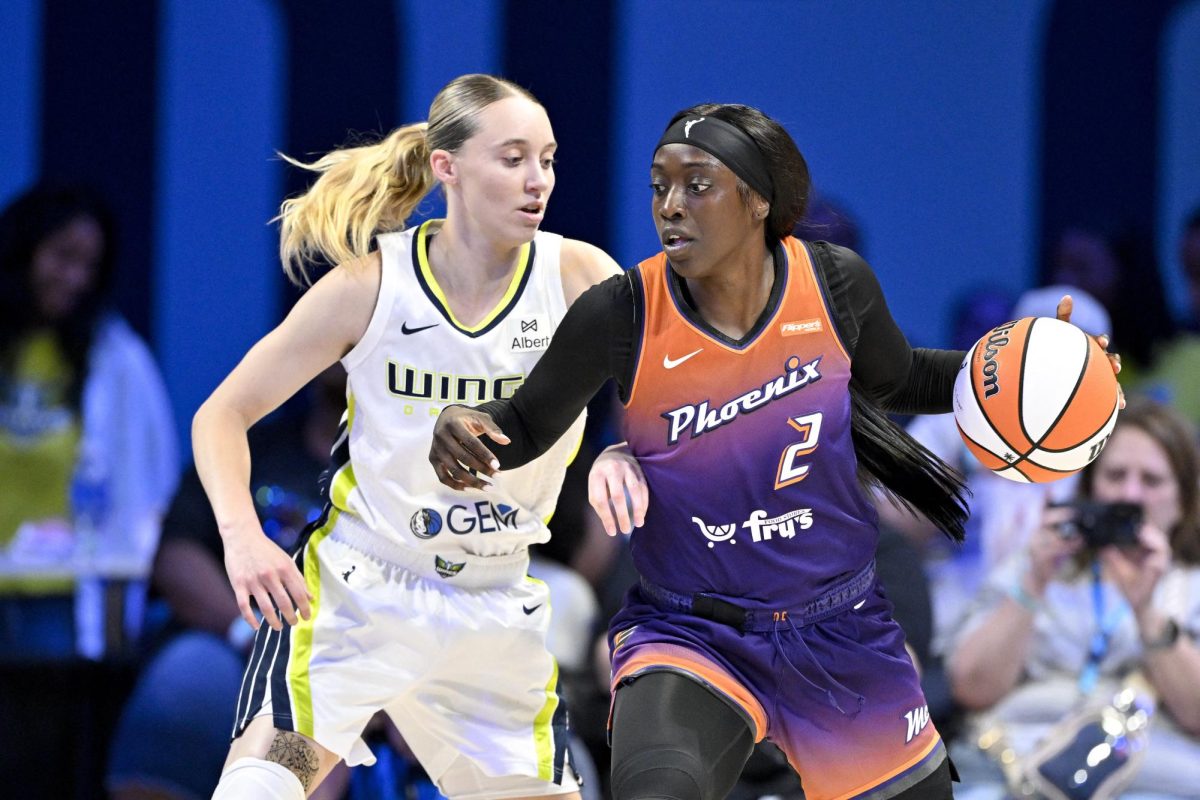
NCAA women’s basketball national champion. Winner of the 2025 Wade Trophy and Honda Sport Award. Finalist for the NCAA Woman of the Year award. Number one pick for the WNBA draft. 2025 WNBA rookie of the year. First player in league history to reach 200 points, 50 rebounds, and 50 assists. Paige Bueckers. The face of women’s basketball in 2025 who changed the trajectory of the sport as a whole through her inspiring comeback journey, decorated college and professional careers, and role model behavior on her platform.
In 2024, UConn Women’s Basketball Head Coach Geno Auriemma stated in correction to a previous statement, “I think she’s the best player of all time. I don’t know whoever said that I said that Paige is the best player in the country”.
Her excellence was recognized not just in Connecticut, where her legacy was most profoundly left, but across the entire nation. In the depths of recovery from major, seemingly career-ending injuries, most people grow distant from their dreams, athletic or not. Paige Bueckers, however, not only returned to basketball after multiple devastating knee injuries but came back stronger, smarter, and more composed, crashing through the ceiling she was expected to be bound by. Her career has not been defined by setbacks, but by how she responds to them. Though her successes are significant, her perseverance is what makes her a deserving Person of the Year candidate.
Paige used her talents this year not just to elevate her own standards, but the standards of the people surrounding her as well. In the midst of the NCAA tournament at the beginning of the year, Paige started receiving large amounts of NIL money, which is financial compensation college student-athletes earn from the use of their Name, Image, and Likeness. She signed sponsorship deals with large companies, making huge profits as just a college athlete. Instead of appreciating NIL as a solo opportunity, she publicly emphasized the importance of whole team benefit, encouraging companies to invest in group sponsorships rather than individual ones. Paige Bueckers didn’t treat NIL as a personal award but as an opportunity to share visibility, advocate for inclusion, and lead selflessly.
In a post regarding her 2021 Wooden Award, Bueckers claimed, “Individual accomplishments are a true acknowledgement of team accomplishments”.
As her popularity grew due to her outstanding performance and admirable character, Paige elevated women’s basketball in its entirety, bringing attention to a historically male-dominant sport. The average number of viewers per game in the 2025 NCAA Women’s Basketball Tournament increased 22% since 2023, parallel to Paige’s rise to fame. Her presence alone turned regular-season games into must-watch events, introducing the sport to new audiences and cultivating a larger fan base. She’s one of the most influential figures of our generation, shifting enthusiasm and engagement towards a female sport that has remained overlooked for decades.
It is a well-known scenario that when people gain fame, wealth, and popularity, they can change and put themselves on a pedestal in comparison to others. has done the exact opposite. She has accepted her fame with grace and humility, sharing the spotlight and being a role model for younger generations. Despite the attention she’s gotten since high school, Paige has remained humble and grounded by consistently crediting her coaches and teammates for her success and avoiding trash talk or self-promotion in interviews. After wins, she deflects praise; after losses, she accepts responsibility.
Some audiences may argue that the Person of the Year title should be given to someone whose impact goes beyond sports, and that it seems as though Paige Buecker’s influence is limited to basketball in the United States. While Paige may not have led a government or changed American policies, she has led a generation in a way that’s unique from many other figures rising to fame. She reshaped the way NIL opportunities are viewed and shared, modeled leadership, resilience, and humility, and drove systemic change in women’s sports by increasing visibility, equity, and possibility. This level of influence, one that reshapes culture and opportunities exemplifies the role of Person of the Year.